
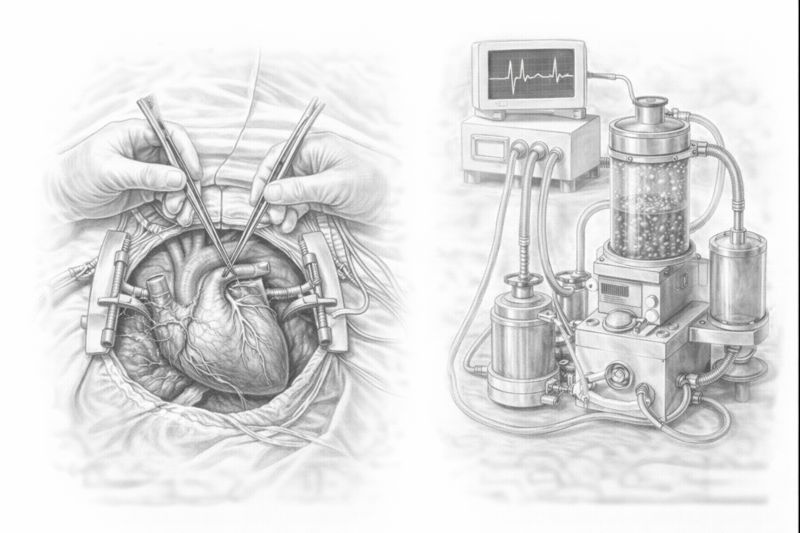
Heart-Lung Machine: The “Life Support” of Surgery
So, how does this machine work, and why is it so important?
Our heart is a muscle mass that pumps blood to the body. During heart surgeries, it is not possible to open the heart and perform the operation without stopping the blood flow to it. For this reason, the heart-lung machine is indispensable for the vast majority of heart surgeries.
- Function: The heart-lung machine temporarily takes over the patient’s body circulation. It receives deoxygenated blood from the body, oxygenates it, and pumps it back into the body. Thus, all organs receive sufficient oxygen throughout the surgery.
- Importance: Stopping the heart allows the surgeon to perform highly precise and detailed interventions in a stable and “bloodless” field, rather than working on a moving organ. After the surgeon completes the procedure, the heart is restarted, and the patient is weaned off the heart-lung machine to natural circulation. This transition process is carefully controlled by the anesthesiologist and surgical team, and once the heart’s rhythmic function is restored, the patient is transferred to the intensive care unit.
Sternotomy: The Wide Path to the Heart
The most common incision method used to access the heart in open-heart surgeries is called sternotomy.
- Application: Sternotomy is performed by cutting the breastbone (sternum), also known as the sternum, along its entire length through the midline of the chest. After the breastbone is opened, the rib cage is gently separated to both sides with a special metal equipment (retractor).
- Advantage: This method allows the surgeon full and wide access to all areas of the heart, major vessels, and surrounding tissues. Especially when working on complex structures or encountering an unexpected situation, this wide field of view offers the surgeon an indispensable advantage. Heart valves, coronary arteries, major arteries, and the heart wall can be clearly seen, which allows the surgery to be performed both safely and effectively.
Advantages of Open-Heart Surgery: Why Is It Still Preferred?
Although transcatheter procedures have advanced, open-heart surgery is still considered the “gold standard” in many situations. The main reasons for this are:
- Comprehensive Intervention Capability: The surgeon can directly access every region of the heart and intervene in all types of complex heart diseases. Advanced procedures such as repairing holes in the heart (like ASD, VSD), replacing or repairing heart valves, removing tumors, and major vascular changes (aortic aneurysm repair) can be successfully performed with open-heart surgery.
- Proven Success and Experience: It has been applied worldwide for many years and is the method with the most experience in surgical literature. This extensive knowledge base allows for the prediction of complications and ensures a high success rate.
- Reliability: Thanks to the controlled environment provided by the heart-lung machine, surgeons can operate with the precision that comes from working in a stopped, motionless, and bloodless heart. It provides critical reliability, especially in situations requiring very fine sutures or the repair of small vessels.
Summary: Frequently Asked Questions (FAQ)
How long does open-heart surgery take?
Is open-heart surgery painful?
What are the risks of surgery?
How long does it take to recover?
What is the difference from minimally invasive methods?
When can sexual activity be resumed after surgery?
No Question Marks Left About Open-Heart Surgery
You can review our special page for detailed answers to the 25 most frequently asked questions about the surgical process, risks, intensive care, and recovery period.
Conclusion
Open heart surgery is a surgical method in which the heart is temporarily stopped with the support of a heart-lung machine, allowing the surgeon to work on the heart directly. It may be used in heart valve diseases, congenital heart defects, diseases of the large vessels such as aortic aneurysm, and advanced coronary artery disease. Which approach is appropriate is decided individually, based on the type of disease, the patient’s general condition and any accompanying conditions, together with examination and imaging findings


