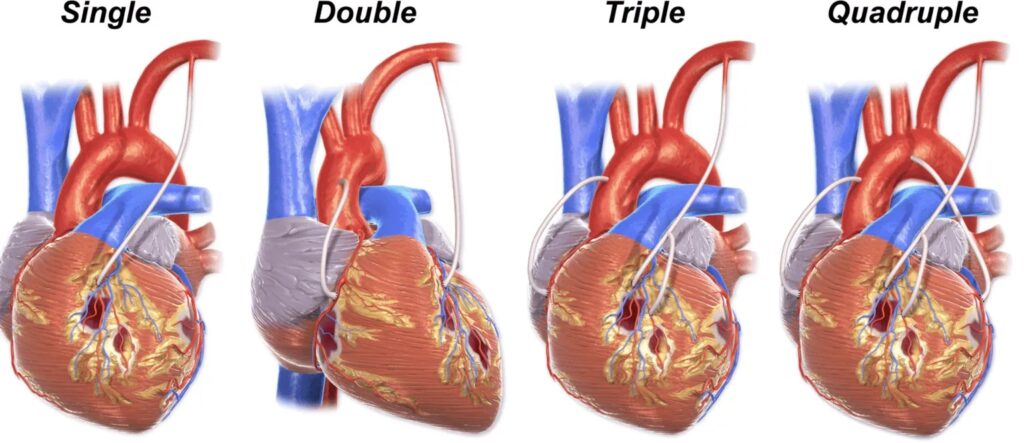
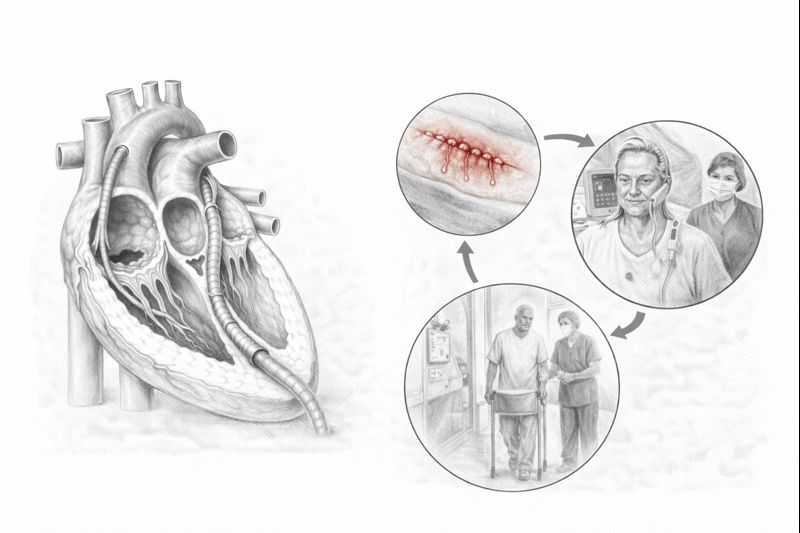
In this comprehensive guide, you will find every detail, from how the surgery is performed and the types of vessels used, to the risks and the golden rules for the recovery process.
What is Coronary Bypass and Why is it Performed?
Coronary artery disease is the obstruction of blood flow by calcium and fat plaques (atherosclerosis) accumulated in the vessel wall. Bypass surgery comes into play for narrowings that cannot be opened with methods like stents or are too widespread.
The word “bypass” means to bridge. The surgeon does not attempt to open the blocked area; instead, they create a new path (graft) by bypassing the blocked region and connecting it to a healthy vessel area. This way, blood reaches the heart muscle by circumventing the blockage.
Purpose:
- To eliminate chest pain (angina).
- To prevent a possible heart attack.
- To preserve the heart’s pumping strength and extend life expectancy.
Who Should Undergo Bypass Surgery?
Not every vessel blockage requires surgery. The “Heart Team” (Cardiologists and Surgeons) decides on surgery in the following situations:
- Left Main Coronary Artery Disease: If there is critical narrowing in the main artery that supplies almost the entire heart.
- Multi-Vessel Disease: If there are widespread narrowings in three or more vessels.
- Diabetic Patients: Surgical intervention is the gold standard for diabetic patients due to the high risk of stent re-blockage.
- Complex Lesions: Narrowings in calcified, tortuous, or bifurcation areas where stents cannot be placed.
- Heart Dysfunction: For long-term survival in patients with reduced heart contraction strength.
How is the Surgery Performed? (Technical Details)
The surgery is usually performed by opening the breastbone (sternotomy). However, in suitable patients, it can also be performed through small incisions (minimally invasive) today.
Heart-Lung Machine (On-Pump)
This is the classic and most common method. The heart is temporarily stopped, and a device called a “heart-lung machine” takes over the body’s blood circulation. The surgeon meticulously sutures the vessels in a motionless and bloodless environment.
Off-Pump Bypass (Beating Heart Surgery)
Without stopping the heart, special stabilizing devices (stabilizers) are used to immobilize only the area where the vessel will be sutured. The procedure is performed while the heart continues to beat. This may be preferred, especially in patients with kidney failure or a high risk of stroke.
Vessels Used (Grafts)
The spare vessels used in bypass surgery are called “grafts.” These vessels are taken from other parts of the body, and their removal does not cause loss of function in the body.
- Internal Mammary Artery (LIMA/RIMA): This artery, taken from inside the chest cavity, is the “diamond” of bypass surgery. It is resistant to pressure, and its patency rate is over 90% for 10-15 years. It is usually connected to the anterior descending artery (LAD), which is the most important artery of the heart.
- Saphenous Vein (Leg Vein): Removed from the inner part of the leg, either openly or endoscopically (closed method). It is commonly used in multi-vessel bypasses.
- Radial Artery (Arm Artery): Taken from the front of the arm in suitable patients. It has a longer lifespan than leg veins.
Pre-Surgery Preparation Process
After the decision for surgery is made, a detailed check-up is performed:
- Lung Tests: Pulmonary function test and X-ray.
- Carotid Doppler: To check for narrowing in the arteries leading to the brain (to prevent stroke risk).
- Infection Screening: If there are dental caries or urinary tract infections, they should be treated before surgery.
- Blood Preparation: Blood group determination and preparation are done for potential blood transfusion needs.
Recovery Process: Hospital and Home
- Intensive Care (1-2 Days): The patient is monitored here until they wake up from surgery and their vital functions are stable.
- Ward (4-5 Days): The patient is encouraged to walk, performs breathing exercises, and is prepared for discharge.
- Home Period (4-6 Weeks): The breastbone takes approximately 6 weeks to heal. During this period, one should lie on their back, avoid lifting heavy objects with their arms, and protect against infection.
📌 Summary: Frequently Asked Questions (FAQs)
How long does bypass surgery take?
Is the surgery risky? What is the risk of death?
When does a bypass patient return to normal life?
Will the area where the leg vein was taken hurt?
Can the artery become blocked again after surgery?
All Your Questions About Bypass Surgery
You can review our special page for answers to the 25 most frequently asked questions about pre-operative preparation, risks, sexual life, driving, and the recovery process.
📊 Summary Information Table
| Topic | Detail |
|---|---|
| Type of Surgery | Open Heart Surgery (Usually Sternotomy) |
| Anesthesia | General Anesthesia |
| Hospital Stay | 5-7 Days |
| Critical Recovery | First 6 weeks (Bone healing) |
| Best Graft | Internal Mammary Artery (LIMA) |
| Things to Consider | Smoking cessation, Medication adherence, Infection prevention |