
What Is Deep Vein Thrombosis (DVT)?
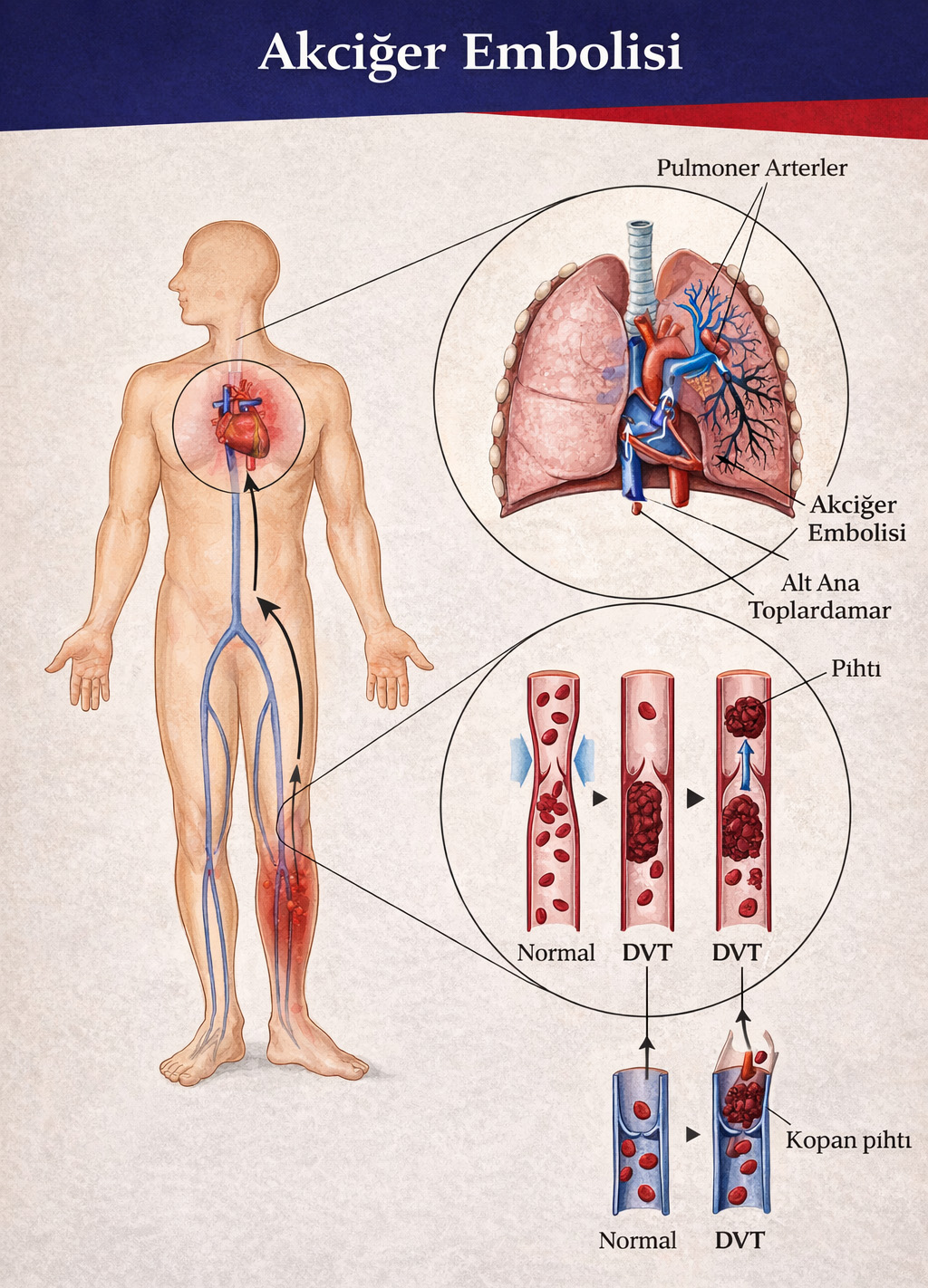
DVT is a blood clot that forms in a deep vein, most often in a leg. It can obstruct blood flow through the vein.
Symptoms
- Swelling in one leg
- Pain or tenderness
- Redness or other colour changes and increased warmth of the skin
What Increases the Risk?
- Prolonged immobility, including long journeys or recovery after surgery
- Smoking
- Obesity
- Conditions that make the blood more likely to clot
What Is Pulmonary Embolism (PE)?
A pulmonary embolism occurs when a clot, often from a deep vein in the leg, travels to and blocks an artery in the lungs. It can be life-threatening.
Symptoms of Pulmonary Embolism
- Sudden shortness of breath
- Chest pain
- Palpitations or a fast heartbeat
- Feeling faint or fainting
Treatment
- Anticoagulant medicines to prevent clot growth and further clots
- Catheter-based or surgical treatment in selected cases
Reducing the Risk
- Stay active within your medical team's recommendations
- Move regularly during long journeys when it is safe to do so
- Use preventive medicines only when prescribed by your doctor
Illustrative Patient Scenarios
Scenario 1: Deep Vein Thrombosis
In this illustrative example, Ayşe, aged 52, is recovering at home after a knee replacement. She develops swelling, pain and redness in her right leg. At hospital, an ultrasound confirms DVT and anticoagulant treatment is started.
Scenario 2: Pulmonary Embolism
In this illustrative example, Mehmet, aged 60, develops sudden breathlessness and chest pain after a long flight. Emergency assessment identifies a pulmonary embolism and treatment begins promptly.
Scenario 3: Unrecognised DVT Followed by PE
In this illustrative example, Fatma, aged 68, has intermittent leg swelling but does not seek advice. She later develops sudden breathlessness and is diagnosed with a pulmonary embolism. Assessment identifies an earlier DVT as the likely source.
Frequently Asked Questions
Book an Appointment
Prof. Dr. Selim İsbir — Yeditepe University Koşuyolu Hospital


