
İçindekiler
Koroner Arterler ve Görevleri
Kalp, vücudun motorudur ve hiç durmadan çalışır. Bu yoğun çalışma temposu için kendi kas dokusunun (miyokard) sürekli taze kana, oksijene ve besine ihtiyacı vardır. Kalbin içindeki kan, kalp kasını doğrudan besleyemez; bu görevi kalbin dış yüzeyini bir ağ gibi saran koroner arterler üstlenir.
❤️ Sol Ana Koroner (LMCA)
- LAD: Kalbin ön yüzünü besler — “dul bırakan damar” olarak bilinir
- Cx (Sirkumfleks): Kalbin sol yan ve arka tarafını besler
🫀 Sağ Koroner Arter (RCA)
- Kalbin sağ tarafını besler
- Elektrik sisteminin merkezini besler
Hastalık Nasıl Oluşur? (Ateroskleroz)
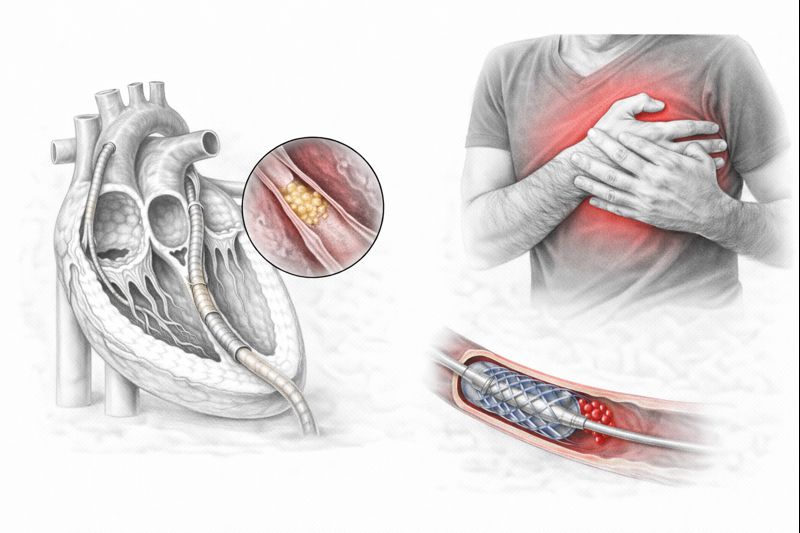
Sağlıklı bir koroner damarın içi pürüzsüzdür ve kan akışı serbesttir. Ancak zamanla; kandaki yüksek kolesterol, sigara toksinleri ve yüksek tansiyonun etkisiyle damar iç duvarı hasar görür. Vücut bu hasarı onarmaya çalışırken bölgeye iltihap hücreleri ve yağlar birikir. Buna ateroskleroz (damar sertliği) denir.
Biriken bu yapılar zamanla kireçlenerek “plak” adını verdiğimiz tümsekleri oluşturur. Plaklar büyüdükçe damar içini daraltır. Kritik eşik aşıldığında iki senaryo gerçekleşir:
- Kararlı Darlık (Stabil Anjina): Plak yavaş büyür, hasta sadece efor sarf ettiğinde (yürürken, merdiven çıkarken) göğüs ağrısı hisseder.
- Kalp Krizi (Akut Sendrom): Plak aniden yırtılır. Yırtılan bölgeye hücum eden kan hücreleri saniyeler içinde pıhtı oluşturur ve damarı %100 tıkar. Kalp kası beslenemez ve ölür. Bu acil bir durumdur.
Risk Faktörleri
KAH, genetik yatkınlık ve yaşam tarzının birleşimiyle oluşur. Riskleri bilmek, korunmanın ilk adımıdır.
🔒 Değiştirilemeyen Faktörler
- Yaş: Erkeklerde 45, kadınlarda 55 yaş üstü risk artar
- Cinsiyet: Erkeklerde daha sık ve erken yaşta görülür
- Aile Öyküsü: Birinci derece akrabalarda genç yaşta kalp krizi öyküsü varsa risk yüksektir
🔓 Değiştirilebilir Faktörler
- Sigara: En önemli risk faktörü
- Yüksek Tansiyon
- Yüksek Kolesterol (özellikle LDL)
- Diyabet — “gizli kalp hastalığı” olarak kabul edilir
- Obezite ve Hareketsizlik
- Kronik Stres
Vücudun Verdiği Sinyaller: Belirtiler
Damar darlığı %70 civarına ulaşana kadar hastalık “sessiz” kalabilir. Belirtiler başladığında en tipik bulgu göğüs ağrısıdır:
- Anjina Pectoris (Göğüs Ağrısı): Göğüs kemiğinin arkasında baskı, sıkışma, yanma veya ağırlık hissidir. Sol kola, boyna, çeneye veya sırta yayılabilir. Eforla, stresle veya soğuk havada artar; dinlenmekle 5–10 dakikada geçer.
- Nefes Darlığı: Efor sırasında yaşıtlarınıza göre daha çabuk yorulma ve nefes nefese kalma.
- Kalp Krizi Belirtileri: Dinlenirken aniden başlayan, 20 dakikadan uzun süren, “fil oturmuş gibi” şiddetli göğüs ağrısı. Beraberinde soğuk terleme, ölüm korkusu ve bulantı görülebilir.
Tanı Yöntemleri
Erken tanı hayat kurtarır. Kardiyoloji uzmanınız şu testleri kullanabilir:
- EKG (Elektrokardiyografi): Kalbin elektriksel aktivitesini ölçer. Kalp krizi anında veya geçirilmiş kriz izlerinde çok değerlidir.
- Efor Testi (Treadmill): Kalbin iş yükü artırıldığında beslenme bozukluğu (iskemi) olup olmadığını gösterir.
- Ekokardiyografi (EKO): Kalp ultrasonudur. Kalp duvarlarının kasılma gücünü ve kapakların durumunu gösterir.
- Sanal Anjiyo (BT Anjiyografi): Tomografi cihazıyla damarların görüntülenmesidir. Düşük-orta riskli hastalarda tarama amaçlı kullanılır.
- Koroner Anjiyografi (Klasik Anjiyo): Tanıdaki altın standarttır. Kasık veya bilek damarından girilerek kalbe boyalı madde verilir ve darlıklar milimetrik olarak görüntülenir. Aynı seansta tedavi (stent) imkanı sağlar.
Tedavi Yöntemleri
Tedavi; damarların yapısına, darlığın derecesine ve hastanın genel durumuna göre Kardiyoloji ve Kalp Damar Cerrahisi Konseyi tarafından belirlenir.
İlaç Tedavisi
Hafif darlıklarda veya girişimsel işlem sonrası koruma amaçlıdır.
Balon ve Stent
Uygun darlıklarda anjiyo laboratuvarında, aynı seansta tedavi imkanı.
Bypass Ameliyatı (CABG)
Çok damar hastalığında veya diyabetlilerde uzun vadeli kalıcı çözüm.
1. İlaç Tedavisi
Hafif darlıklarda veya girişimsel işlem sonrası koruma amaçlıdır:
- Kan Sulandırıcılar (Aspirin vb.): Pıhtı oluşumunu engeller.
- Statinler: Kolesterolü düşürür ve plağı stabilize eder (yırtılmasını önler).
- Beta Blokerler: Kalbin hızını yavaşlatarak oksijen ihtiyacını azaltır.
2. Balon ve Stent (Girişimsel Yöntemler)
Uygun darlıklarda anjiyo laboratuvarında yapılır:
- Balon Anjiyoplasti: Sönük bir balon darlık bölgesine ilerletilir ve şişirilerek damar açılır.
- Stent: Balonla açılan bölgenin tekrar daralmasını önlemek için yerleştirilen metal kafestir. Günümüzde genellikle ilaç salınımlı stentler kullanılır; bu stentler dokunun tekrar büyümesini engelleyen ilaçlar salgılar.
3. Bypass Ameliyatı (CABG)
Çok sayıda damarda darlık varsa, ana damar tıkanıksa veya hasta diyabetikse cerrahi tercih edilir. Vücudun başka bölgesinden (bacak toplardamarı veya göğüs atardamarı) alınan damarlar, tıkalı bölgenin ilerisine dikilerek yeni bir “köprü” (bypass) oluşturulur.
Korunma ve Yaşam Tarzı
KAH tedavisinde, stent takılsa veya ameliyat olunsa bile hastalık tamamen “bitmiş” sayılmaz. Damar sertliği sistemik bir süreçtir. Tekrar etmemesi için:
- Akdeniz tipi beslenme — zeytinyağı, balık, sebze, meyve ve tam tahıl
- Sigarayı bırakın — bıraktıktan 1 yıl sonra kalp krizi riski %50 azalır
- Haftada en az 150 dakika tempolu yürüyüş yapın
- Tansiyon, şeker ve kolesterol değerlerinizi doktorunuzun önerdiği hedef aralıklarda tutun
Aklınızda Başka Sorular mı Var?
Kalp krizi belirtilerinden beslenme önerilerine, stent sonrası yaşamdan cinsel hayata kadar hastalarımızın en çok merak ettiği 25 soruyu ve uzman cevaplarını özel rehberimizde topladık.
Tüm Soruları ve Cevapları İnceleyin →Sık Sorulan Sorular
Randevu Almak İçin
Prof. Dr. Selim İsbir — Yeditepe Üniversitesi Koşuyolu Hastanesi


